



Mineral Water Plant: Complete Guide to Setup, Cost, and Business Plan
Introduction to Mineral Water Plant
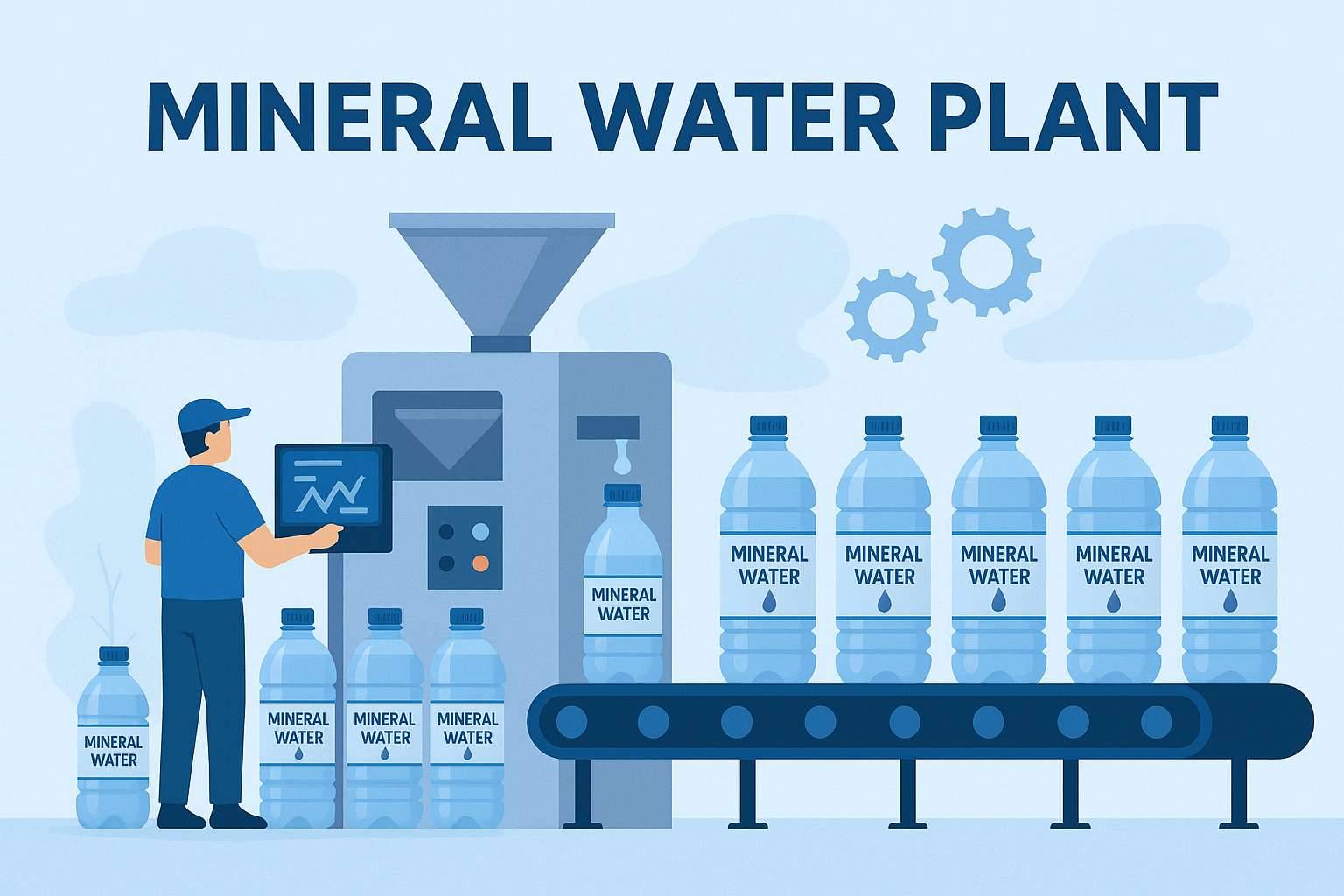
One of the fastest-growing business opportunities in the FMCG and industrial sector today is setting up a mineral water plant. With increasing health awareness, rising urban populations, and growing concerns about water contamination, the demand for packaged drinking water is witnessing unprecedented growth.
Did you know?
The bottled water industry in India is expected to reach INR 403 billion by 2026, growing at a CAGR of over 13%. This surge in demand opens a profitable window for entrepreneurs and investors aiming to enter the packaged water business.
In this comprehensive guide, we will cover everything from setup costs, equipment, and licensing to how to prepare a mineral water plant project report and start your own business.
1. Types of Mineral Water Plants
Understanding the type of plant you want to establish is critical before investing.
Bottled Water Plant
Produces small-sized packaged drinking water bottles (200 ml to 2 liters), commonly used in homes, restaurants, and retail.
Jar Filling Plant
Focuses on 20-liter jars, mostly for office and household consumption with repeat-use logistics.
Pouch/Sachet Plant
Low-cost setup producing small sachets (typically 250ml), often used in rural or mass-distribution models.
Small-Scale vs Industrial Plant
-
Small-scale plants require lower capital and serve localized markets.
-
Industrial-scale units cater to regional or national demand with high automation.
2. Market Opportunity and Demand
Growing Health Consciousness
Post-pandemic, there’s a surge in consumer preference for safe drinking water, even in tier 2 and 3 cities.
Untapped Rural Markets
The rural penetration of branded mineral water is still low, offering massive room for expansion.
Tourism and Events
Bottled water demand is consistent across travel, events, schools, hospitals, and public places.
3. Mineral Water Plant Setup Cost
One of the most searched queries for entrepreneurs is: How much does it cost to set up a mineral water plant? Here’s a cost breakdown:
Cost Components
| Component | Estimated Cost (INR) |
|---|---|
| Land & Building (Rent/Lease) | 2–10 Lakhs (or more if owned) |
| Machinery & Equipment | 10–25 Lakhs |
| Water Source Setup | 1–2 Lakhs |
| Licensing & Registration | 1–2 Lakhs |
| Packaging & Branding | 2–5 Lakhs |
| Working Capital (Initial) | 3–5 Lakhs |
| Total Estimate |
15–50 Lakhs |
Cost-saving Tips
Start with a semi-automatic line to reduce machinery costs.
Lease land to avoid high real estate costs initially.
Source equipment from industrial platforms like Romegamart.
4. Key Equipment and Machinery
The machinery you choose determines your plant’s capacity and quality.
Essential Machines
Water Treatment Plant: Includes filtration, UV, RO, and ozonation.
Bottle Making Machine (optional): For in-house PET bottle production.
Filling & Capping Machine: Semi or fully automatic.
Labeling & Shrink Wrapping: Branding and packaging.
Quality Testing Equipment: Ensures compliance with BIS and FSSAI.
Always ensure the machines are certified and sourced from reliable vendors. Explore Industrial Systems for a wide range of equipment.
5. Licenses and Legal Requirements
A mineral water plant in India requires multiple registrations and approvals.
Mandatory Licenses
BIS Certification (IS 14543): For packaged drinking water.
FSSAI License: For food and beverage safety compliance.
Pollution NOC: From the local Pollution Control Board.
Water Testing Report: From an NABL-accredited lab.
GST Registration & Business Entity Setup (LLP/Pvt Ltd): For legal and tax compliance.
Additional Considerations
Fire Safety
Factory License
Employee Welfare Registrations (ESI, PF if applicable)
6. Mineral Water Plant Project Report
A professionally prepared mineral water plant project report is essential for:
Securing bank loans
Getting investors on board
Applying for government subsidies or startup schemes
Key Inclusions
Executive summary
Market analysis
Cost structure and financials
Break-even analysis
Projected profit & loss
Compliance and certifications list
You can use expert consultants or industry portals to get a detailed, customized report.
7. How to Start a Mineral Water Business: Step-by-Step Guide
If you're wondering how to start a mineral water business, here’s a simplified roadmap:
Step 1: Research & Business Planning
Identify your target market
Decide plant size and output
Estimate budget and funding
Step 2: Location & Water Source
Choose a clean water-abundant site
Conduct water testing for mineral content
Step 3: Machinery Purchase & Installation
Source verified machinery
Install with technical experts
Step 4: Licensing & Legal Approvals
Apply for BIS, FSSAI, GST, and NOC
Step 5: Staffing & Training
Hire skilled labor for operations
Train on hygiene, safety, and testing protocols
Step 6: Marketing & Distribution
Design attractive packaging
Create wholesale and retail distribution channels
List on B2B platforms and local distributors
8. Common Mistakes to Avoid
Starting a mineral water plant can be profitable, but only if you avoid these pitfalls:
1. Underestimating Licensing Requirements
Skipping or delaying licenses can lead to heavy penalties and even shutdowns.
2. Poor Water Source Selection
Choosing water sources without testing can lead to high purification costs or regulatory rejections.
3. Overproduction Without Demand
Many plants fail by scaling up production before building a sales network.
4. Weak Branding and Packaging
In today’s competitive market, packaging design influences customer trust and buying behavior.
9. Conclusion and Expert Tips
Starting a mineral water plant is a lucrative and scalable business if planned and executed with precision. From selecting the right location and machinery to ensuring legal compliance and branding, every step plays a critical role in the plant’s success.
Expert Tips:
Start small but plan for scale.
Automate key functions for hygiene and efficiency.
Build relationships with retailers and institutional buyers early.
Monitor your quality continuously – one contamination can ruin your brand.
Next Steps:
Explore Industrial Equipment Here
Get a Custom Project Report
Book a Free Consultation with Experts
Looking to start your own mineral water plant?
Start with expert guidance, reliable equipment, and a clear business plan – the first step is yours to take.



