



Best Carbon Filters for RO – 2025 Guide
Clean and pure drinking water has become a necessity, not a luxury. With the rise in water contamination levels, Reverse Osmosis (RO) systems have become a household essential across India. One of the most critical components of any RO system is the carbon filter — the stage responsible for removing chlorine, bad odors, and organic impurities from water.
As we enter 2025, the demand for high-quality carbon filters is skyrocketing — both in domestic and commercial sectors. Whether you’re a technician, retailer, or water purifier wholesaler, choosing the right filter directly affects purification quality and customer satisfaction.
In this detailed guide, we’ll explore the best carbon filters for RO systems, their types, pricing, and features, along with insights into how modern B2B platforms are simplifying carbon filter procurement across India.
What is a Carbon Filter in RO Systems?
A carbon filter is a key filtration stage in RO systems designed to remove chlorine, chloramine, and volatile organic compounds (VOCs) from water. It enhances the taste, smell, and safety of drinking water while protecting the RO membrane from chemical damage.
Carbon filters typically use activated carbon granules or carbon blocks made from natural materials like coconut shells or coal. These materials have high adsorption capacity, trapping microscopic impurities and ensuring clean output water.
Types of Carbon Filters for RO Systems
The best RO systems often include one or more of the following carbon filter types:
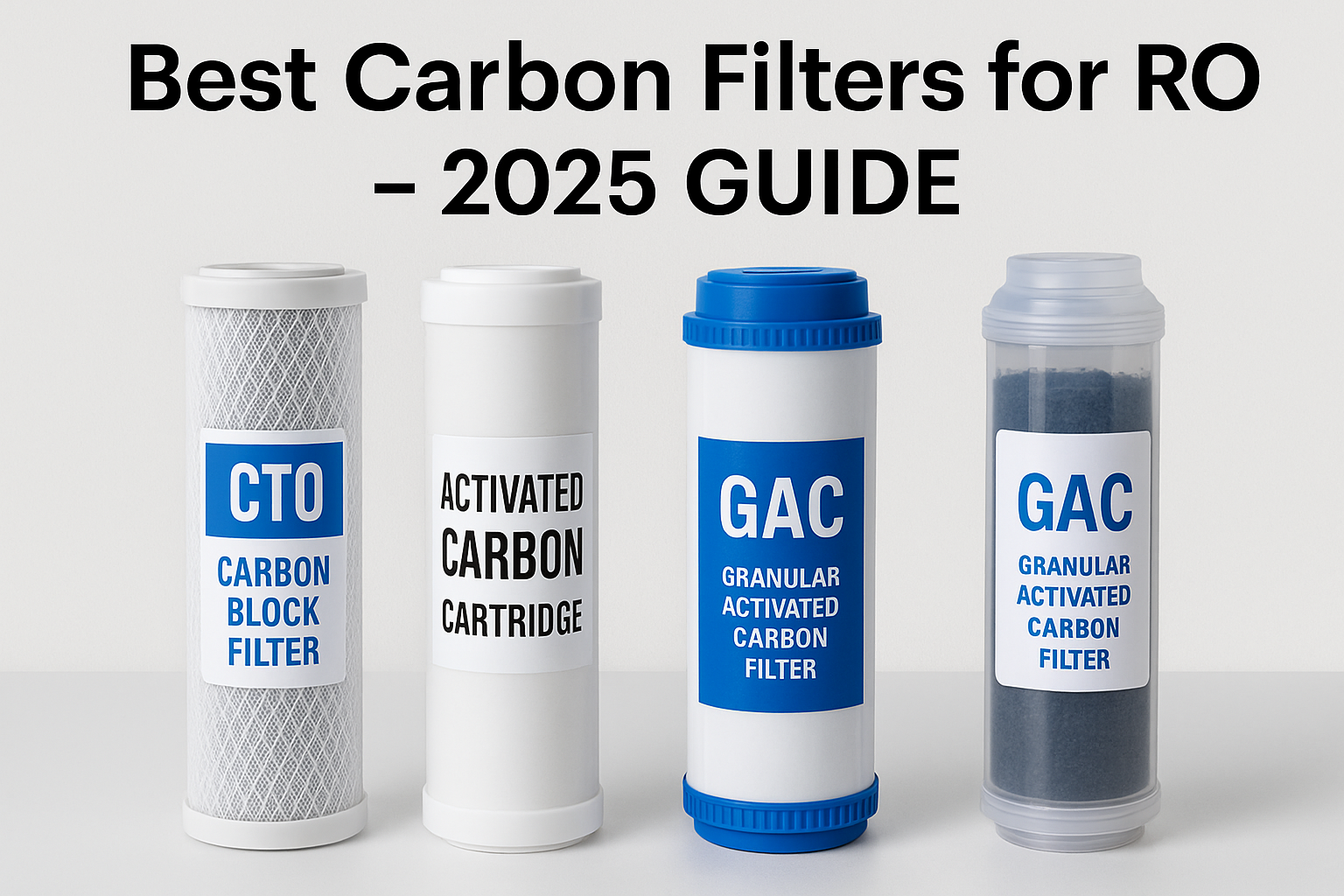
Granular Activated Carbon (GAC) Filter
-
Contains loose carbon granules that remove chlorine and odor.
-
Ideal for pre-filtration stages in RO systems.
-
Improves the lifespan of RO membranes
Carbon Block Filter (CTO Filter)
-
Made of compressed carbon powder with a dense structure.
-
Offers better chlorine and chemical removal than GAC filters.
-
Commonly used as a post-carbon or polishing filter in household RO units.
Inline Carbon Filter
-
Compact and easy to replace.
-
Used for final taste and odor polishing in domestic water purifiers.
-
Perfect for under-sink and wall-mounted RO models.
Activated Carbon Pre-Filter
-
Installed before the RO membrane to protect it from chlorine damage.
-
Enhances system efficiency and extends membrane life.
Each type plays a crucial role, and most advanced RO systems use a combination of these filters for maximum purification.
Why Carbon Filters Are Essential in RO Systems
RO technology alone cannot remove every impurity. Before water reaches the RO membrane, carbon filters ensure that:
-
Chlorine and chemicals are eliminated, preventing membrane damage.
-
Bad odors and tastes are neutralized.
-
Organic contaminants like pesticides are adsorbed.
-
TDS levels remain stable, enhancing water flavor.
Without carbon filtration, an RO system’s efficiency would drop significantly, and membrane replacement frequency would increase — leading to higher maintenance costs.
Carbon Filter Prices in India (2025 Overview)
The cost of RO carbon filters in India depends on type, size, quality, and brand. Based on recent wholesale market trends:
| Type | Average Price Range (Retail) | **Wholesale Price (Approx.) |
|---|---|---|
| Granular Activated Carbon (GAC) Filter | ₹120 – ₹300 | ₹70 – ₹180 |
| Carbon Block (CTO) Filter | ₹180 – ₹400 | ₹100 – ₹250 |
| Inline Carbon Filter | ₹200 – ₹500 | ₹120 – ₹300 |
| Activated Carbon Pre-Filter | ₹150 – ₹350 | ₹90 – ₹220 |
These prices are based on 2025 wholesale and B2B market estimates. Wholesale buyers, distributors, and service centers can find bulk pricing and volume discounts through specialized online marketplaces that focus on RO and water treatment components.
Key Factors to Consider Before Buying a Carbon Filter
When choosing the best carbon filter for your RO system or business, keep these points in mind:
Micron Rating:
Filters with lower micron ratings capture finer impurities, offering higher purification efficiency.
Carbon Material:
Opt for coconut-shell-based activated carbon — it’s more eco-friendly and provides better adsorption performance.
Flow Rate:
Ensure the filter supports the RO system’s required water pressure and flow capacity.
Filter Compatibility:
Match the filter type (inline, pre-carbon, post-carbon) to your system model before purchasing.
Certification & Standards:
Look for ISO or NSF-certified filters that meet international water safety standards.
Shelf Life & Replacement Frequency:
On average, carbon filters should be replaced every 6–12 months, depending on usage and water quality.
Advantages of Buying RO Carbon Filters from Trusted B2B Platforms
With the rise of eCommerce and digital trade, many businesses now rely on specialized B2B marketplaces for their RO and filtration product requirements.
Here’s why:
-
Extensive Product Range: Access to over 1 lakh+ RO and water purifier parts including membranes, housings, pumps, and carbon filters.
-
Verified Sellers: All suppliers are verified for authenticity and quality assurance.
-
Bulk Discounts: Perfect for wholesalers and technicians who buy in large volumes.
-
Transparent Pricing: Eliminates middlemen and ensures real-time price comparison.
-
Fast Nationwide Shipping: 2–5 day delivery to almost all major cities in India.
-
Safe Payments & Return Policies: Protected transactions and easy return options in case of product defects.
These advantages are inspired by India’s leading B2B platforms that focus exclusively on water treatment and RO spare parts — ensuring affordability and reliability for businesses nationwide.
How Carbon Filters Are Shaping India’s Water Purifier Market
The growing adoption of carbon filters is directly tied to India’s push for clean and safe drinking water. Consumers are becoming more aware of chemical contaminants, driving the demand for multi-stage RO systems with advanced carbon filtration technology.
B2B platforms and manufacturers are responding by:
-
Launching innovative carbon block filters with higher absorption rates.
-
Offering customized filter sizes for domestic, commercial, and industrial systems.
-
Providing eco-friendly carbon options made from natural materials.
This evolution not only benefits households but also supports India’s growing water treatment and bottling industries.
The Role of B2B Portals in Streamlining the RO Industry
Modern B2B marketplaces have become the foundation of the Indian RO supply chain. They enable businesses to source everything — from membranes and housings to filters and dosing systems — from verified sellers in just a few clicks.
Such platforms help:
-
Manufacturers expand reach to retailers and service centers nationwide.
-
Wholesalers reduce procurement time and stock management costs.
-
Retailers & technicians gain access to genuine spare parts quickly and affordably.
These platforms are helping India’s RO market become more organized, transparent, and digitally efficient.
Future Trends: Smart Carbon Filters & Sustainable Materials
Looking ahead, 2025 and beyond will see the rise of:
-
Smart filters with performance indicators for real-time monitoring.
-
Reusable carbon cartridges to reduce waste.
-
AI-assisted water purification systems that adjust filter cycles based on water quality.
The focus will shift from simple purification to sustainable and intelligent filtration — a trend already being supported by digital wholesale networks across India.
Conclusion
Carbon filters are the heart of RO systems, ensuring every drop of water is clean, safe, and refreshing. With India’s increasing dependence on RO technology, choosing the right carbon filter has never been more important.
For businesses, wholesalers, and technicians, specialized B2B platforms have made sourcing easier than ever — providing genuine carbon filters at competitive wholesale prices, all from verified suppliers.
If you’re planning to buy carbon filters in bulk or upgrade your RO inventory, it’s wise to partner with a trusted B2B marketplace that specializes in water treatment solutions — offering you reliability, transparency, and nationwide reach.
Frequently Asked Questions (FAQs)
Q1. How often should RO carbon filters be replaced?
Every 6–12 months, depending on water quality and system usage.
Q2. Which is better — GAC or CTO carbon filter?
CTO filters offer better chlorine removal and taste improvement, while GAC filters are great for pre-filtration. Many RO systems use both.
Q3. Can carbon filters remove TDS?
No, carbon filters do not remove TDS. That’s handled by the RO membrane. Carbon filters remove chemicals, chlorine, and odors.
Q4. What’s the average price of an RO carbon filter in 2025?
Retail prices range from ₹150–₹500 depending on type and size, with lower rates available for bulk or B2B purchases.
Q5. Where can I buy high-quality RO carbon filters in bulk?
You can explore India’s top B2B platforms for RO and water treatment products — offering verified sellers, competitive pricing, and reliable nationwide delivery.
If your business deals in RO systems, filters, or water treatment components, consider partnering with a dedicated B2B marketplace ROmegamart that specializes in this sector. With verified suppliers, 1 lakh+ products, and fast delivery, it’s the smartest way to grow your business and source genuine carbon filters in 2025.



